What gifts will you bring to Jesus?
Think not about wrapped gifts, but gifts of love, faith, trust, worship, prayer, service, forgiveness, witness, wealth, the gift of yourself and time devoted to God’s Word.
Tomorrow, Sunday, January 6, 2019, many cultures will be celebrating the Epiphany, a time when Christians remember the Wise Men or Three Kings who visited Jesus. Epiphany is always celebrated 12 days after Christmas, why it is also termed “The Twelfth Night”. The visit from the Wise Men to baby Jesus was prophesied in the Book of Isaiah. Isaiah 60:6 (NIV) "Herds of camels will cover your land, young camels of Midian and Ephah. And all from Sheba will come, bearing gold and incense and proclaiming the praise of the Lord."
The prophet Isaiah is the first of four Major Prophets along with Jeremiah, Ezekiel, and Daniel in Hebrew Scripture, our Old Testament of the Bible. A prophet is one who speaks in the name of the Lord so they are very respected.
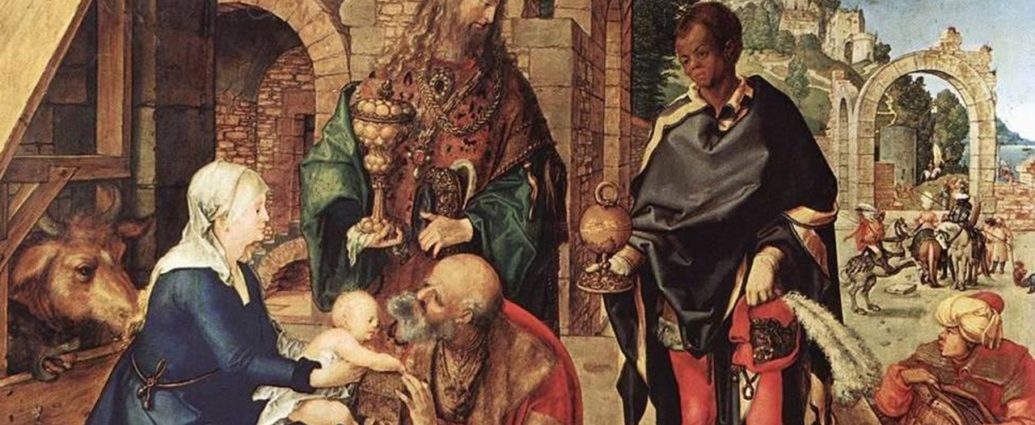
Although Matthew’s gospel does not include the names or number of the Magi, many believe that the number of the gifts is what led to the tradition of the Three Wise Men. The Three Wise Men or Magi came from the east to Jerusalem to meet with King Herod. There are no specific details about them in Matthew just that they came from the “east”. What we do know is that over time the Magi have been assigned names Melchior, Caspar, and Balthasar. The Magi brought gifts to baby Jesus in Bethlehem, gifts of myrrh, frankincense and gold. Myrrh being commonly used as an anointing oil, frankincense as a perfume, and gold as a valuable. The three gifts had a spiritual meaning: gold as a symbol of kingship on earth, frankincense (an incense) as a symbol of His Divine birth, and myrrh (an embalming oil) as a symbol of death (mortality). The term Magi is the precise Greek word used in Matthew’s gospel. His story demonstrates that the Magi were a famous class of astrologers and dream-interpreters who served the Persian King.
Here are some of the cultures that celebrate the day of Epiphany:
Catholics and orthodox Christians observe Epiphany as a single day, with some in America celebrating the Epiphany feast the Sunday following January 6. Up until the 19th century, the Epiphany was more important than Christmas Day, and it was used to celebrate both the three kings' (or three wise men's) visit to Jesus shortly after his birth and also Jesus' baptism by John the Baptist. In the West, Christians began celebrating the Epiphany in the 4th century.
Mexico 'El Dia de los Reyes' (the day of The Three Kings). It's traditional to eat a special cake called 'Rosca de Reyes' (Three Kings Cake). A figure of Baby Jesus is hidden inside the cake. Whoever finds the baby Jesus in their piece of cake is the 'Godparent' of Jesus for that year
The Protestant churches celebrate a season of Epiphany from January 6 to Ash Wednesday. The word 'Epiphany' comes from Greek and means 'manifestation'. It celebrates 'the revelation or manifestation of God in his Son as human in Jesus Christ'. The six Sundays which follow Epiphany are known as the time of manifestation; the last Sunday of the Epiphany is celebrated as Transfiguration Sunday.(also it’s the Sunday right before Ash Wednesday)
Spain 'The festival of the three Magic Kings' - 'Fiesta de Los tres Reyes Mages', and is when Spanish and some other Catholic children receive their presents - as they are delivered by the Three Kings
Italy; some children also get their presents on Epiphany, however, it’s not Santa but an old lady called 'Befana' brings them. Children put stockings up by the fireplace for Befana to fill.
Austria; at Epiphany, some people write a special sign in chalk over their front door. It's a reminder of the Wise Men that visited the baby Jesus. It's made from the year split in two with initials of the names that are sometimes given to 'the three wise men', Caspar, Melchior and Balthazar, in the middle. So 2018 would be: 20*C*M*B*18. The sign is meant to protect the house for the coming year. Some parts of Germany also have the tradition of marking over doors.
Belgium; children dress up as the three wise men and go from door to door to sing songs and people give them money or sweets. Children in Poland also go out singing on Epiphany.
In Ireland, Epiphany is also sometimes called Women's Christmas, the women get the day off and men do the housework and cooking.
Matthew 2 New International Version (NIV)
The Magi Visit the Messiah
2 After Jesus was born in Bethlehem in Judea, during the time of King Herod, Magi[a] from the east came to Jerusalem 2 and asked, “Where is the one who has been born king of the Jews? We saw his star when it rose and have come to worship him.”3 When King Herod heard this he was disturbed, and all Jerusalem with him. 4 When he had called together all the people’s chief priests and teachers of the law, he asked them where the Messiah was to be born. 5 “In Bethlehem in Judea,” they replied, “for this is what the prophet has written:6 “‘But you, Bethlehem, in the land of Judah,are by no means least among the rulers of Judah; for out of you will come a ruler
who will shepherd my people Israel.’”7 Then Herod called the Magi secretly and found out from them the exact time the star had appeared. 8 He sent them to Bethlehem and said, “Go and search carefully for the child. As soon as you find him, report to me, so that I too may go and worship him.”9 After they had heard the king, they went on their way, and the star they had seen when it rose went ahead of them until it stopped over the place where the child was. 10 When they saw the star, they were overjoyed. 11 On coming to the house, they saw the child with his mother Mary, and they bowed down and worshiped him. Then they opened their treasures and presented him with gifts of gold, frankincense and myrrh. 12 And having been warned in a dream not to go back to Herod, they returned to their country by another route.
The Escape to Egypt
13 When they had gone, an angel of the Lord appeared to Joseph in a dream. “Get up,” he said, “take the child and his mother and escape to Egypt. Stay there until I tell you, for Herod is going to search for the child to kill him.”14 So he got up, took the child and his mother during the night and left for Egypt, 15 where he stayed until the death of Herod. And so was fulfilled what the Lord had said through the prophet: “Out of Egypt I called my son.”16 When Herod realized that he had been outwitted by the Magi, he was furious, and he gave orders to kill all the boys in Bethlehem and its vicinity who were two years old and under, in accordance with the time he had learned from the Magi. 17 Then what was said through the prophet Jeremiah was fulfilled:18 “A voice is heard in Ramah, weeping and great mourning, Rachel weeping for her children and refusing to be comforted,because they are no more.”
The Return to Nazareth
19 After Herod died, an angel of the Lord appeared in a dream to Joseph in Egypt 20 and said, “Get up, take the child and his mother and go to the land of Israel, for those who were trying to take the child’s life are dead.”21 So he got up, took the child and his mother and went to the land of Israel. 22 But when he heard that Archelaus was reigning in Judea in place of his father Herod, he was afraid to go there. Having been warned in a dream, he withdrew to the district of Galilee, 23 and he went and lived in a town called Nazareth. So was fulfilled what was said through the prophets, that he would be called a Nazarene.