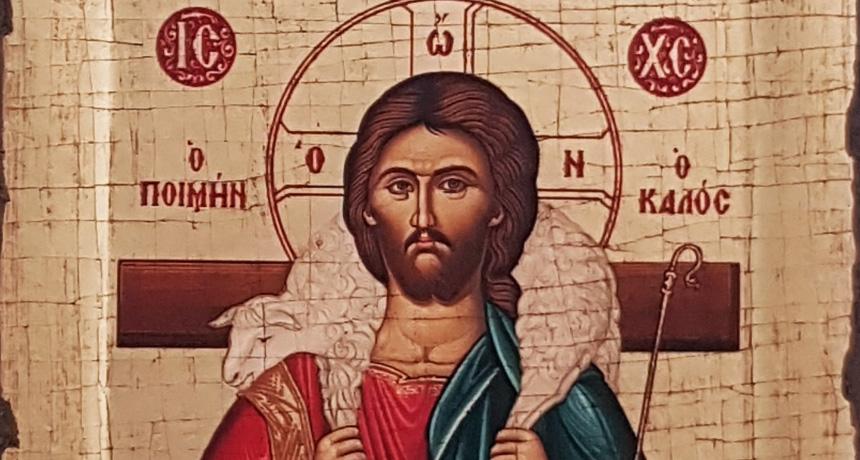
The Good Shepherd is a very comforting and peaceful image used in John 10:1-21, in which Jesus Christ is depicted as the Good Shepherd who lays down his life for his sheep. The image of the Good Shepherd is the most common of the symbolic representations of Christ found in early Christian art.
Here are some interesting facts about Shepherds and their flock of sheep. It is necessary to understand the depth of the relationship between a Shepherd and his flock to understand the love that God has for all of His followers. Followers of Christianity are called the “flock,” with Christ known as the “Good Shepherd.” Sheep are mentioned in the Bible more than 500 times, more than any other animal. Sheep were an important source of life for the Hebrews and for others during Biblical times. Sheep are used throughout the Bible to symbolically refer to God's people. The very first shepherd was Abel. Abraham and Moses were shepherds. King David was the best-known shepherd of Bible history. He wrote the beloved Psalm 23. This Psalm of King David described the love of God as a Good Shepherd. Shepherds were the first people to see the newborn Jesus Christ. The mark of the sheep is to recognize the voice of their shepherd and listen to their voice. The shepherd protects his flock and would give his life for them. Sheep have excellent memories for faces and know their shepherd. The shepherd knows how to gather sheep that have been scattered. This is necessary when the sheep must be led back to the fold, or when they are to be guided to another pasture. It is accomplished by his standing in the center of his scattered sheep, and giving them the call. Pebbles are thrown in the direction of and beyond members of the flock that fail to heed the call, in order to get their attention and then bring them back. He does not commence to lead them away until he knows they are all there. The shepherd is deeply interested in every single one of his flock. They are usually counted each evening as they enter the fold and he is able to feel the absence of anyone of his sheep. Sheep can’t swim. They are also very good at getting stuck on their backs and being totally defenseless. They can be frightened into having a heart attack. Sheep must be led to green pastures (Psalm 23:1), they cannot find safe pasture. They cannot find food, they will eat a pasture down to the roots if not led to another pasture. They need a shepherd to lead them and help them lie down in green pastures. A sheepfold is a large enclosed or fenced area in which sheep can spend the night. The sheep enter and leave by a gate or a door. During the night a guard watches the sheep in the sheepfold and protects them. After an evening’s rest, the shepherd will arise, eat his breakfast, and eventually come and call his sheep to himself. It is important to note that a sheepfold will usually provide shelter for many flocks belonging to different shepherds. Yet, the sheep will know the voice of their shepherd and follow only their own shepherd. Did you notice how much the Shepherd does for his flock of sheep and how much importance he places on their lives? Sheep wander, fall, get hurt, have no natural defenses such as claws, horns or fangs, and no sense of direction. Sheep need a shepherd just like we need Jesus Christ, our Lord God and Savior.
Jesus is referred to as a shepherd throughout the New Testament (Matthew 2:6; Hebrews 13:20-21; 1 Peter 2:25; 5:4; Revelation 7:17). The sheep are those who believe in Jesus Christ and as a result know the voice of the true shepherd and will not follow another. Those who follow anyone other than Jesus Christ are not the sheep in this parable. Those who truly belong to God will follow Jesus Christ and no other. Jesus is the Good Shepherd because He was willing to and did die for all those who believe in Him – His sheep .
John 10:1-21 (NIV)
The Good Shepherd and His Sheep
“Very truly I tell you Pharisees, anyone who does not enter the sheep pen by the gate, but climbs in by some other way, is a thief and a robber. 2 The one who enters by the gate is the shepherd of the sheep. 3 The gatekeeper opens the gate for him, and the sheep listen to his voice. He calls his own sheep by name and leads them out. 4 When he has brought out all his own, he goes on ahead of them, and his sheep follow him because they know his voice. 5 But they will never follow a stranger; in fact, they will run away from him because they do not recognize a stranger’s voice.” 6 Jesus used this figure of speech, but the Pharisees did not understand what he was telling them.7 Therefore Jesus said again, “Very truly I tell you, I am the gate for the sheep. 8 All who have come before me are thieves and robbers, but the sheep have not listened to them. 9 I am the gate; whoever enters through me will be saved.[a] They will come in and go out, and find pasture. 10 The thief comes only to steal and kill and destroy; I have come that they may have life, and have it to the full.11 “I am the good shepherd. The good shepherd lays down his life for the sheep. 12 The hired hand is not the shepherd and does not own the sheep. So when he sees the wolf coming, he abandons the sheep and runs away. Then the wolf attacks the flock and scatters it. 13 The man runs away because he is a hired hand and cares nothing for the sheep.14 “I am the good shepherd; I know my sheep and my sheep know me— 15 just as the Father knows me and I know the Father—and I lay down my life for the sheep. 16 I have other sheep that are not of this sheep pen. I must bring them also. They too will listen to my voice, and there shall be one flock and one shepherd. 17 The reason my Father loves me is that I lay down my life—only to take it up again. 18 No one takes it from me, but I lay it down of my own accord. I have authority to lay it down and authority to take it up again. This command I received from my Father.”19 The Jews who heard these words were again divided. 20 Many of them said, “He is demon-possessed and raving mad. Why listen to him?”21 But others said, “These are not the sayings of a man possessed by a demon. Can a demon open the eyes of the blind?”